AI-powered learning
Save this course
Debugging, Disassembly & Reversing in Linux for x64 Architecture
Gain insights into using GDB for debugging in Linux. Explore disassembly, memory investigation, and register updates. Learn about pointers, stack, and function parameters in x64 architecture.
43 Lessons
16h
Updated 5 months ago
Join 3 million developers at
Join 3 million developers at
LEARNING OBJECTIVES
- A familiarity with disassembly in GDB environment of simple C/C++ programs
- A good understanding of how to debug programs with a cross-sectional view to the contents of registers, stack and memory
- The ability to use GDB as a dump analysis tool
- Hands-on experience with C/C++ programs from the disassembly output
Learning Roadmap
2.
Memory, Registers, and Simple Arithmetic
Memory, Registers, and Simple Arithmetic
Grasp the fundamentals of memory, registers, arithmetic operations, and their representations in assembly language.
3.
Code Optimization
Code Optimization
3 Lessons
3 Lessons
Go hands-on with debugging and optimizing code using GDB to enhance performance.
4.
Number Representations
Number Representations
2 Lessons
2 Lessons
Grasp the fundamentals of number systems, including decimal, ternary, binary, and hexadecimal.
5.
Pointers
Pointers
6 Lessons
6 Lessons
Solve problems in using pointers for memory manipulation, arithmetic, incrementation, and multiplication in programming.
6.
Bytes, Words, Double, and Quad Words
Bytes, Words, Double, and Quad Words
2 Lessons
2 Lessons
Investigate memory granularity and layout in x64 Linux, focusing on bytes to quadwords.
7.
Pointers to Memory
Pointers to Memory
3 Lessons
3 Lessons
Practice using pointers, their types, initialization, and debugging in memory management.
8.
Logical Instructions and RIP
Logical Instructions and RIP
4 Lessons
4 Lessons
Step through logical instructions, zeroing techniques, and the role of the Instruction Pointer.
9.
Reconstructing a Program with Pointers
Reconstructing a Program with Pointers
3 Lessons
3 Lessons
Unpack the core of disassembling, reconstructing, and optimizing C/C++ code with pointers.
10.
Memory and Stacks
Memory and Stacks
3 Lessons
3 Lessons
Go hands-on with stacks in memory, function calls, and GDB debugging techniques.
11.
Frame Pointer and Local Variables
Frame Pointer and Local Variables
4 Lessons
4 Lessons
Break down the steps to understand stack functionality, function prolog/epilog, and local variables.
12.
Function Parameters
Function Parameters
2 Lessons
2 Lessons
Solve problems in function parameter passing and stack memory analysis in x64 Linux systems.
13.
More Instructions
More Instructions
2 Lessons
2 Lessons
Simplify complex topics of CPU flags, conditional jumps, and assembly instructions.
14.
Function Pointer Parameters
Function Pointer Parameters
2 Lessons
2 Lessons
Practice using function pointers in projects, dissembling with GDB, and enhancing debugging skills.
Certificate of Completion
Showcase your accomplishment by sharing your certificate of completion.
Complete more lessons to unlock your certificate
Developed by MAANG Engineers
ABOUT THIS COURSE
GNU Debugger (GDB) is used for debugging C/C++ programs in LINUX/UNIX environments. It is a good tool to investigate what is happening inside a program, and how the contents inside the memory are changed with the execution of the program.
The main focus of the course is the disassembly of the program, where we'll use simple operations in C. With the help of GDB, we'll examine the contents of the registers and memory. We'll also learn how they are changed while executing basic operations. We’ll then explore the use of pointers, stack, and function parameters, and analyze how different registers update their values. With the help of disassembly output, we’ll learn how a simple C program can be reconstructed. The disassembly output is important for debugging and core dump analysis. We’ll use assembly language for x64 architecture.
By the end of this course, you should be able to debug the programs and memory contents at assembly level when a program executes or probe into the problem when a program crashes.
ABOUT THE AUTHOR
Dmitry Vostokov
Diagnostician. The Author of Diagnomicon.
Trusted by 3 million developers working at companies
A
Anthony Walker
@_webarchitect_
E
Evan Dunbar
ML Engineer
S
Software Developer
Carlos Matias La Borde
S
Souvik Kundu
Front-end Developer
V
Vinay Krishnaiah
Software Developer
Built for 10x Developers
No Passive Learning
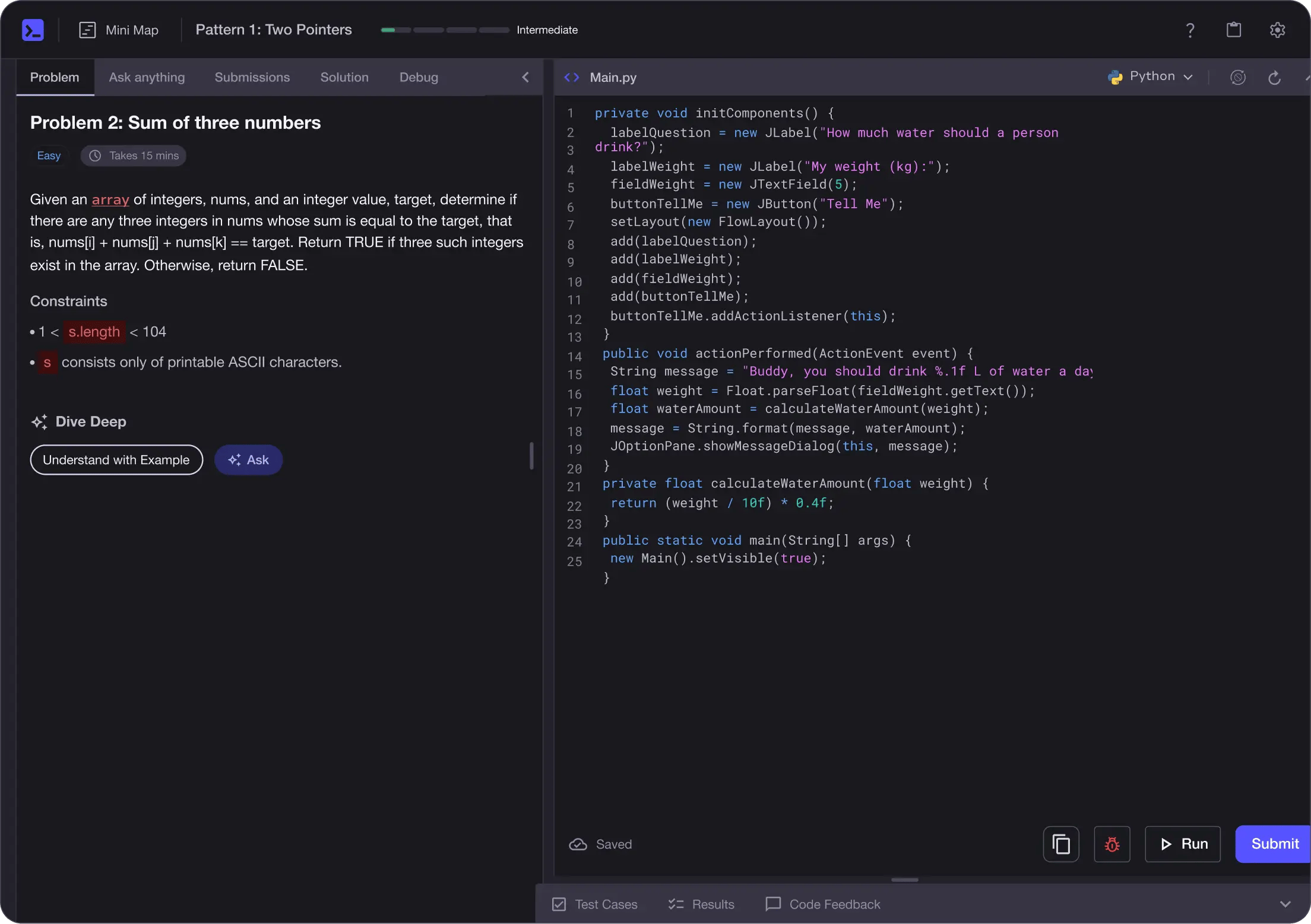
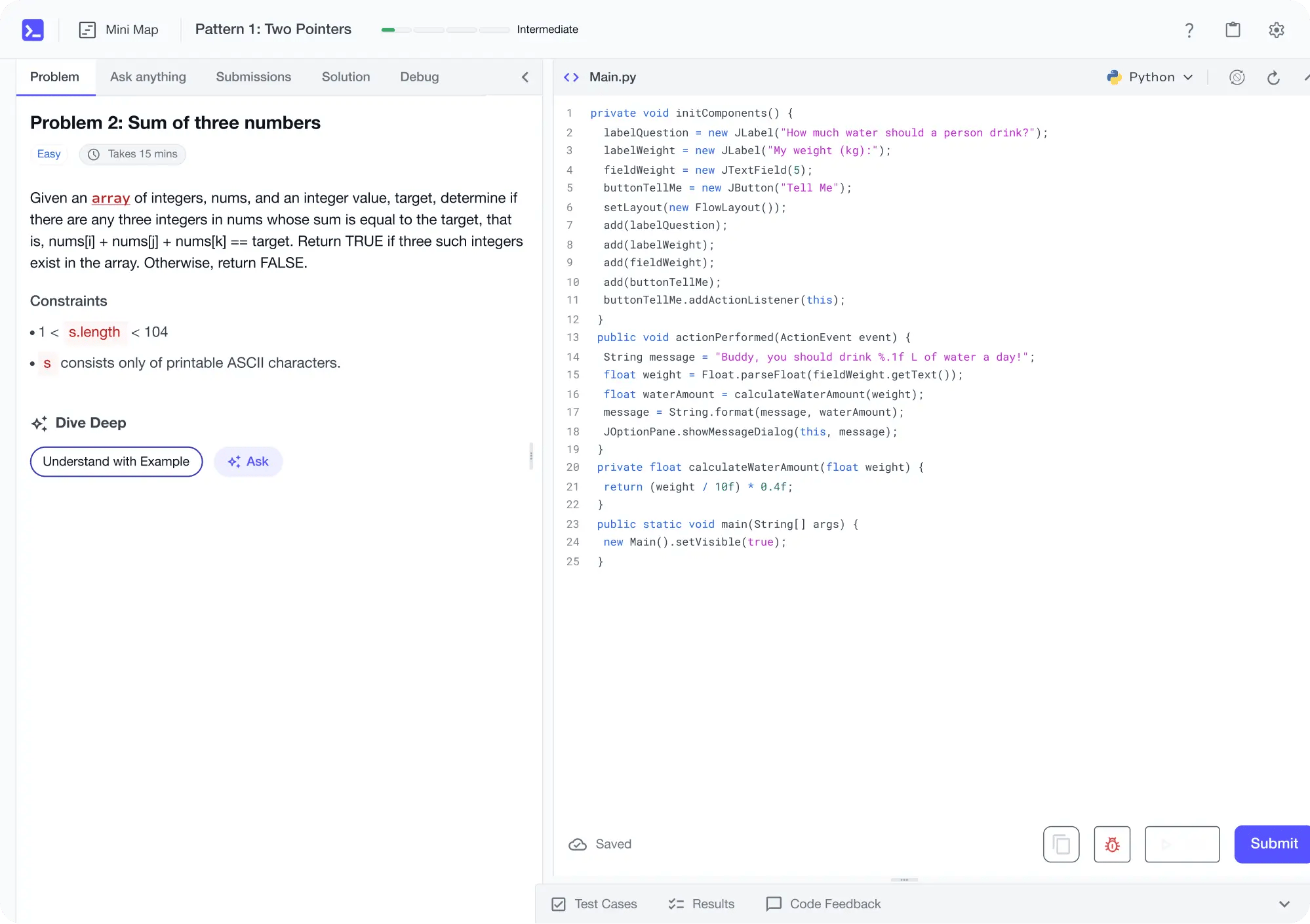
Learn by building with project-based lessons and in-browser code editor
Personalized Roadmaps
The platform adapts to your strengths & skills gaps as you go


Future-proof Your Career
Get hands-on with in-demand skills
AI Code Mentor
Write better code with AI feedback, smart debugging, and "Ask AI"
MAANG+ Interview Prep
AI Mock Interviews simulate every technical loop at top companies

Free Resources